Climate PolicyEnvironment
Trending

12 Best Ways to Stop Climate Change (2026 Guide)

Climate change is no longer a distant threat, and understanding how to stop climate change has become more important than ever. As of 2026, recent years have seen global temperatures temporarily approach or exceed 1.4°C above pre-industrial levels, showing how close the planet is to critical warming thresholds. This rise is already driving extreme heatwaves, floods, and unpredictable weather patterns across the world. It is now a real-time crisis that affects daily life, economies, and ecosystems.

Best Ways to Stop Climate Change

Many people think global warming and climate change mean the same thing, but they are closely related yet different. Global warming refers specifically to the long-term rise in Earth’s average temperature, while climate change includes broader changes such as shifting weather patterns, rising sea levels, and increased frequency of extreme events. Over the past few decades, global warming has accelerated due to multiple human-driven factors.

According to the Intergovernmental Panel on Climate Change, the pace of global warming has accelerated significantly over recent decades due to human activities.

Greenhouse emissions are mainly boosting the process of global warming. Our daily activities are increasing the temperature of the Earth, leading to more frequent and intense extreme weather conditions across the planet. Greenhouse gases are not the only reason for global warming and climate change but some other reasons also contribute such as deforestation, population growth, spoiling the marine ecosystem, etc.

These growing impacts show why it is important to focus on practical and effective ways to stop climate change.

Climate Change Situation In 2026

Recent years have shown how quickly climate patterns are changing. Heatwaves are becoming more frequent, glaciers are melting faster, and cities are facing extreme weather conditions. Countries are investing heavily in renewable energy, electric vehicles, and sustainable infrastructure, yet global emissions remain high. This makes it clear that both individual actions and large-scale changes are necessary.

Recent official climate updates show that 2015–2025 were the 11 hottest years on record, and 2025 was about 1.43°C above the pre-industrial average. That makes climate change a present-day issue, not a future warning.

12 Best Ways to Stop Climate Change

We have discussed a lot about the causes and effects of climate change but now we need to find out the solutions to deal with it. Every small contribution will be counted, so be a part of the mission to stop climate change.

Infographic showing effective ways to stop global climate change including clean energy, forest protection, energy efficiency, sustainable transport, and waste reduction

The latest UNEP Emissions Gap Report says the gap is still wide between current policies and what the Paris Agreement needs. Annual emissions must fall sharply by 2035, and a 1.5°C overshoot is now very likely within the next decade. UNEP says every fraction of a degree avoided means lower losses for people and ecosystems, so small actions still matter when they add up.

Control Fossil Fuel Use

Fossil fuel is one of the main reasons for climate change. The fossil fuels (coal, oil, gas, etc.) when burn releases CO2 (carbon dioxide) gas mainly and many other greenhouse gases. Now the amount of carbon dioxide has been increased a lot in the atmosphere.

Carbon dioxide can hold the heat from the Sun and thus the Earth is becoming warm day by day. Reducing the use of fossil fuels is one of the most effective ways to slow climate change. Today, this also includes shifting to electric vehicles, adopting rooftop solar systems, and supporting clean energy alternatives that reduce dependence on coal, oil, and gas.

The transition away from fossil fuels is already visible in the power sector, with clean energy capacity expanding rapidly across many regions. The IEA says global renewable capacity is set to rise by almost 4,600 GW from 2025 to 2030, with solar PV driving nearly 80% of that growth.

Control Industrial Emissions

Industries still play a major role in climate change. The IEA says the industry sector was directly responsible for 9.0 Gt of CO2 in 2022, which was about a quarter of global energy-system CO2 emissions, and cement and steel remain difficult sectors to decarbonise.

Infographic showing ways to control industrial emissions including cleaner manufacturing, energy efficiency, low carbon fuels, and carbon capture

In 2024, total energy-related CO2 emissions also reached a record 37.8 Gt, which shows that industrial and energy emissions still need faster cuts in the years ahead. Cleaner production methods, better efficiency, and low-carbon fuels can help industries reduce emissions at scale.

Stop Deforestation

We all are very well aware of the importance of plants and trees for the environment. We cannot deny the importance of trees in climate regulation on the planet. Trees help in balancing the amount of carbon dioxide in the atmosphere to make our planet a healthy place to survive.

Unfortunately, we are losing our natural treasure just to fulfill our selfish demand such as industrialization, urbanization, agricultural needs, etc. We all should work together to plant more trees and by stopping the cutting down of trees. If we can grow more trees, it will help to balance the amount of carbon dioxide in the environment and thus helps to stop climate change.

Forest loss is still a major climate issue. Global Forest Watch says 88% of global tree-cover loss from 2021 to 2025 happened in natural forests, which means protecting intact forests matters as much as planting new trees.

There is real momentum in land restoration too: UNCCD says global restoration commitments are advancing, and Saudi Arabia recently reported restoring one million hectares of land.

Save Energy

We all are facing the problem of climate change across the world. Excessive pollution is undoubtedly one of the main reasons for climate change. We can control pollution somehow by saving energy. Everyone can contribute by accepting a few small changes in their daily lifestyle.

Infographic showing ways to save energy to reduce climate change including efficient lighting, smart appliances, reducing cooling load, and cutting unnecessary energy use

  1. You should switch to the energy-efficient light bulbs.
  2. Use energy-efficient appliances such as 5-star rated devices and inverter-based air conditioners, which consume significantly less electricity over time.
  3. Always check the energy star label while buying new appliances.
  4. You should install a heat pump to your home which will work quite efficiently by transferring energy from one place to another.
  5. In summer, try to keep your home cool as much as you can to avoid the use of ACs.
  6. Try to hang-dry your clothes whenever possible, use dryers only when it is required.

Efficiency matters more now because electricity demand keeps rising. The IEA reports that renewables and nuclear together supplied 40% of global electricity growth in 2024, while renewables alone provided 32% of total generation.

Say ‘Yes’ to Renewable Energy

As per the present scenario of the environment, we all know how important is to save energy. Energy-saving will help to stop climate change. To tackle the energy-saving issue, the use of renewable energy is one of the best options. Renewable energy is helpful not only for the environment but for the economy as well. We all should accept the formula of renewable energy; we can make a big difference for our cities and especially at the rural locations.

Renewable energy is now becoming the dominant source of new power generation globally. The IEA says that in more than 80% of countries, renewable power capacity will grow faster in 2025–2030 than it did in the previous five years, with solar PV leading the expansion.

Invest in Clean Technology and Innovation

Clean technology is moving fast in 2026. The IEA’s State of Energy Innovation 2026 says it identified over 150 major innovation highlights from 2025, including solid-state air conditioning, perovskite solar, fusion energy, sodium-ion batteries, and next-generation geothermal.

Infographic showing clean technology solutions for climate change including renewable systems, energy storage, smart grids, and low carbon innovation

The IEA also says capital flows to the energy sector are set to rise to USD 3.3 trillion in 2025, with around USD 2.2 trillion going to renewables, nuclear, grids, storage, low-emissions fuels, efficiency, and electrification. These trends show that cleaner systems are not only possible, they are already expanding.

Reduce Transport Emissions

Most of the pollution occurs due to vehicles and transportation. The number of vehicles has increased a lot from the past few years and thus the amount of pollution has also increased equally. If we try to minimize vehicular pollution, we can change our environment to a much healthier one. You can contribute your share by adapting some simple activities.

Infographic showing ways to reduce pollution from daily transport including public transport, cycling, carpooling, and electric vehicles

  1. Prefer public transport whenever possible.
  2. Prefer to ride a bike as an alternative to a car.
  3. Adapt the habit of car-pooling.
  4. Opting for an electric vehicle can significantly reduce long-term fuel costs and emissions, especially as charging infrastructure and battery efficiency continue to improve.

Transport is changing fast too. The IEA says electric car sales passed 17 million worldwide in 2024, and public charging points grew by more than 30% that year, which shows cleaner mobility is becoming mainstream.

Recycle the Waste

Manufacturing industries release a much amount of carbon dioxide in the atmosphere. These manufacturing industries are engaged with the production of various goods of our daily uses; hence it is unavoidable. However, we can go for an alternative solution which is recycling.

Recycling is a process that is eco-friendly and cost-effective as well. Recycling is a process that remakes the waste into another recyclable material by preventing the emission of greenhouse gases. Go to the recycling center available in your city and contribute to stop climate change.

Waste is now a climate issue, not just a cleanup issue. UNEP says food loss and waste generate 8–10% of global greenhouse-gas emissions and up to 14% of methane, so reducing waste cuts emissions in a real way.

Reduce Overconsumption and Unsustainable Lifestyle

High levels of consumption and resource use are putting increasing pressure on the planet. Reducing waste, avoiding unnecessary consumption, and choosing sustainable products can significantly lower environmental impact, especially in high-income regions.

The policy side is moving too, but not fast enough. OECD’s 2025 Climate Action Monitor says climate action increased in many jurisdictions in 2024, yet national targets still remain insufficient for Paris goals.

But again, cities and institutions are moving toward circular action, including food-waste reduction programs and broader sustainable consumption initiatives that cut emissions at the source.

Minimize the Wastage of Water

It requires a lot of energy to supply and heat water. We can minimize the amount of carbon pollution in the environment by saving water. Hence, try to take a relatively short bath, do not forget to turn off the tap when not in use (especially while brushing teeth), preferable buy water-sense labeled installations & appliances. These small changes, when adopted at scale, can contribute to reducing overall energy demand and environmental impact.

Water challenges are increasing in many regions, but efficient water management and conservation efforts are helping reduce pressure on resources. WMO says the water cycle is becoming more erratic, swinging between drought and deluge, while UN-Water says climate change is making water more scarce, less predictable, and more polluted.

Support Climate Policies and Global Action

Infographic showing climate policies and global actions to reduce emissions including regulations, clean energy policies, cooperation, and sustainable infrastructure

Individual efforts matter, but climate action becomes much stronger when governments and industries move together. UNEP’s Emissions Gap Report 2025 says annual emissions need to fall by about 35% by 2035 for a 2°C pathway and by about 55% for a 1.5°C pathway, while a temporary overshoot of 1.5°C is very likely within the next decade. This means stronger policies, cleaner energy rules, and better climate commitments are still urgently needed in 2026.

Push Yourself for The Conservation of Climate

UNEP’s latest report says every fraction of a degree avoided reduces losses for people and ecosystems. That is why awareness works best when it leads to pressure for stronger policy, cleaner energy, and faster emissions cuts.

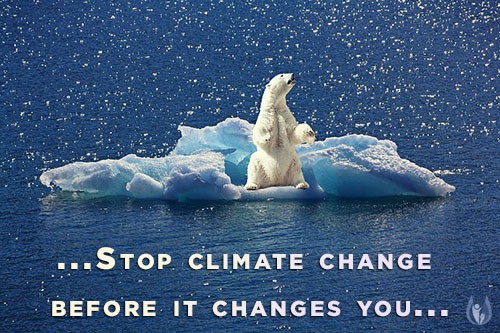
stop-climate-change

Everyone speaks a lot about climate change as a big environmental problem but no one is keen to take the necessary steps to tackle this issue. Awareness about climate change plays an important role in the conservation of climate change. Discuss climate change and its conservation with your friends or family.

Share your thoughts with them and also listen to their thinking about what they think about climate change & its conservation. The actions we take today—both individually and collectively—will directly shape how livable our planet remains in the coming decades.

Act now to reduce climate change before its impacts become irreversible for our planet and future generations.

Leave a Reply

Your email address will not be published. Required fields are marked *

Back to top button